The Midnight Panic That Started It All
I remember exactly when this started feeling real to me. It was January 2026, and I was doom-scrolling through Publishing Twitter at 2 AM like some kind of masochist, and I saw the Atlantic investigation hit. Over 700 AI-generated titles, all dressed up in covers that looked disturbingly similar to debut literary novels, all flooding Amazon within days of the originals launching. Not weeks. Days. The specificity of it made my stomach drop in that particular way reserved for threats you didn’t see coming but somehow recognize immediately as real.
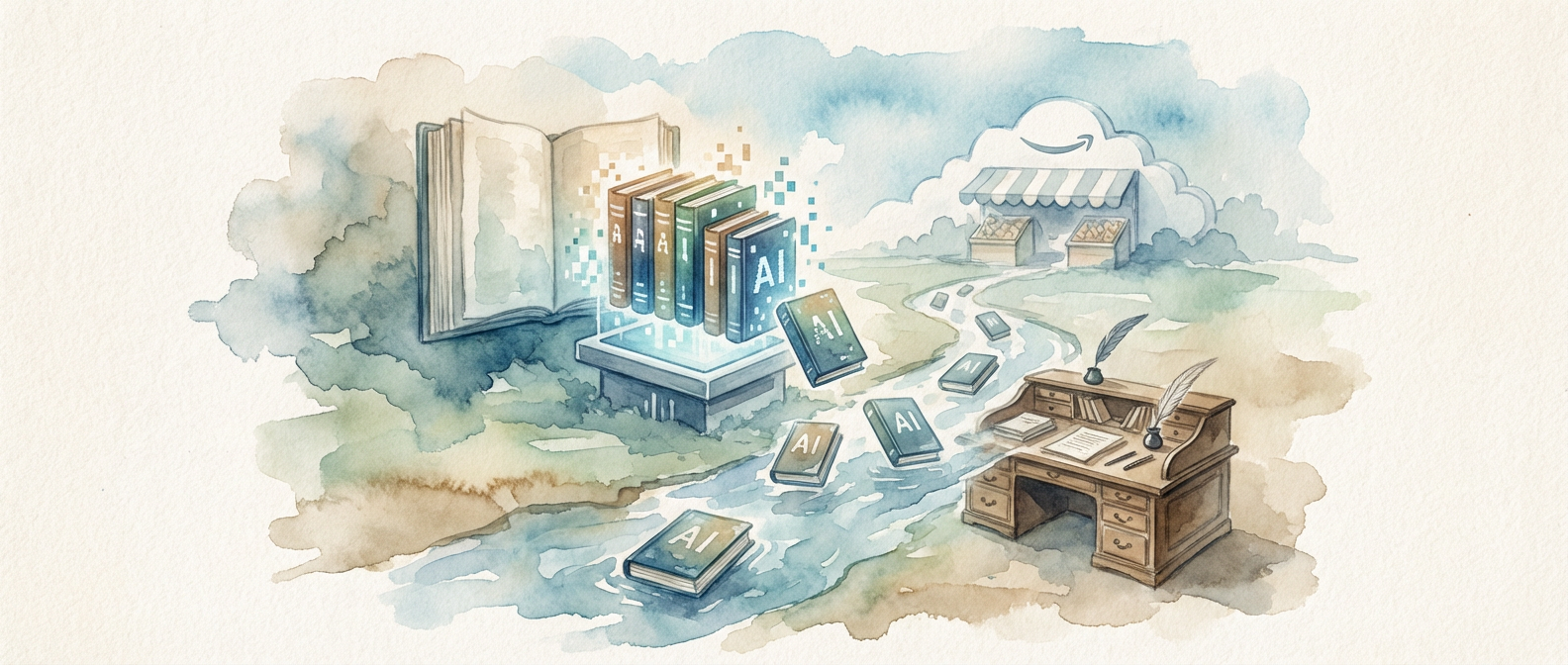
What struck me most, reading through the details, wasn’t the sheer volume of fakes. It was the precision. These weren’t crude imitations. They were deliberate mimicry. Covers that echoed the genuine article. Titles that played with keywords. Descriptions that borrowed the particular cadence of the originals. Someone, some algorithm, some person operating that algorithm, had studied what worked and decided to replicate it at scale. And then something worse happened: people started buying the clones instead.
When the Wrong Book Wins
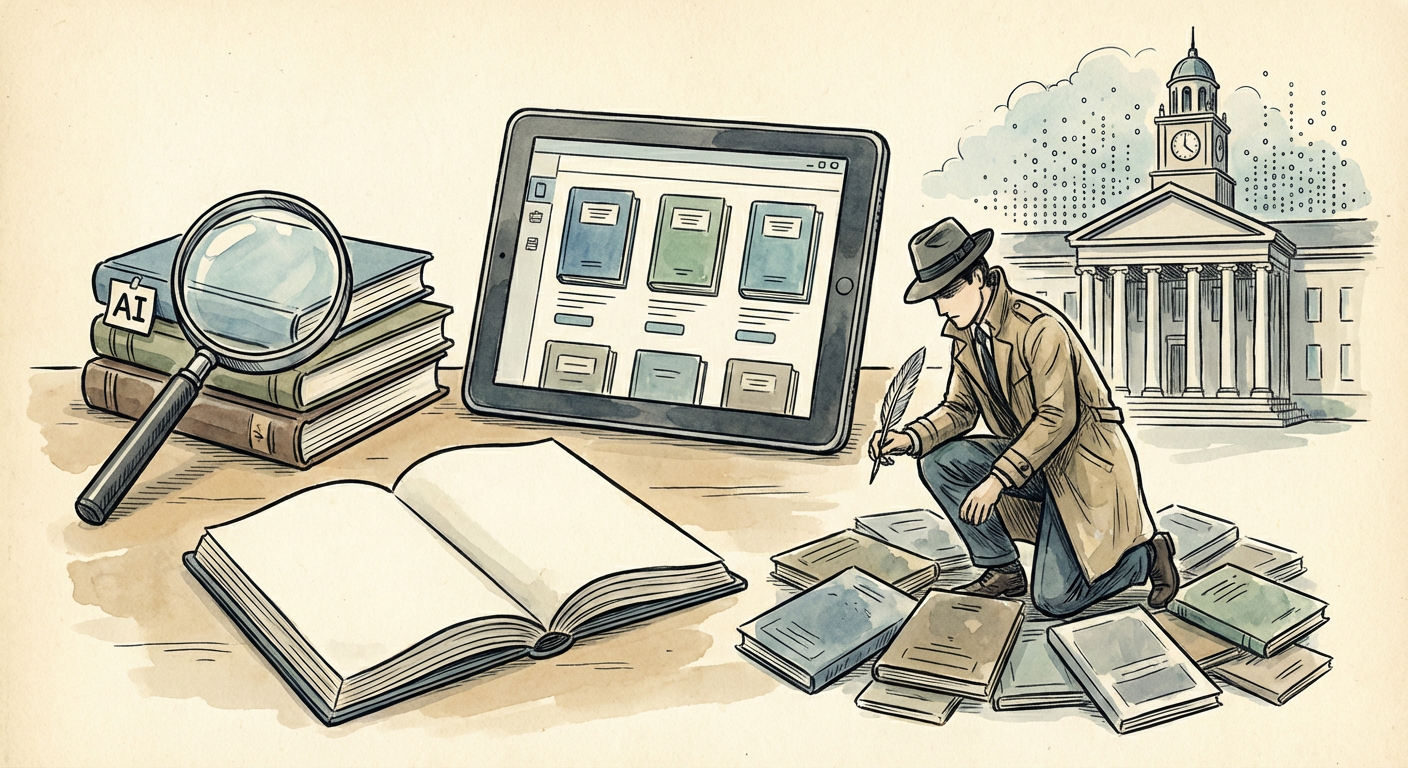
Here’s where I need you to sit with me in the uncomfortable part. The Authors Guild filed an updated brief in early 2026 that included specific cases where these AI-generated clones had actually outsold the original titles in their first two weeks. Not because they were better. Not because they offered something the genuine article didn’t. They won because they were cheaper and because Amazon’s algorithm, that massive recommendation engine we all pretend to understand, surfaced them more prominently. The machine couldn’t distinguish between the real and the replica, so it treated them as competitors. And in a race defined by price and visibility, the knockoff sometimes crossed the finish line first.
I kept thinking about debut authors during this whole thing. These are people who spent years on their manuscripts. Years. And then months or years more trying to find an agent, then a publisher, then fighting for a decent print run and marketing budget. They finally get their book into the world, and within 48 hours, there’s a ghost version of it competing for the same readers. The cruelty of that asymmetry is almost philosophical. The original author did the work. The duplicate author did not. And yet there they are, both on the same shelf, indistinguishable to most shoppers.
The Reckoning and the Response That Wasn’t Quite Enough
Amazon responded in February 2026 with Amazon KDP content policy updates that required AI-assisted content disclosures. On paper, this seemed reasonable. Transparency. Let readers know what they’re getting. But then the Science Fiction and Fantasy Writers Association looked at the enforcement mechanisms and essentially said, “This is not it.” Which is a very polite way of saying the policy was toothless. How would Amazon verify disclosure compliance? What were the actual consequences for violations? These questions hung in the air unanswered.
The Authors Guild on AI and publishing kept pushing, kept filing briefs, kept documenting the specific harm. But there’s something frustrating about watching policy lag behind the actual damage, watching institutions move at their characteristic glacial pace while the problem spreads in real time. By the time Amazon’s disclosure policy even went into effect, the damage to certain debut authors’ launches was already irreversible.
The Subtle Shift No One’s Talking About Enough
But here’s the thing that nobody seems to be discussing with enough attention. A 2025 survey by Publishers Lunch found that 67% of acquiring editors said concerns about AI cloning had fundamentally changed what they were willing to acquire. Not the criteria, exactly, but the priority. The calculus. These editors were now more likely to fast-track distinctive, author-brand-driven voices over high-concept premise books.
Read that sentence slowly. Let it settle. What this means is that editors, facing this new threat landscape, decided that a unique authorial voice became something closer to a liability buffer. If your book could be summarized in three sentences, it could be cloned in three minutes. But if your book was fundamentally about the way you write, the rhythm of your sentences, the particular way you see the world and render it into language, that becomes much harder to replicate. At least, the replication becomes more obviously inferior.
This is genuinely fascinating from a literary perspective. We’ve spent decades talking about voice, about how important it is, how it’s the ineffable thing that separates great writers from competent ones. And now the market is saying: yes. And also: please make yours as distinctive as possible so that when someone tries to copy it, the copy falls apart immediately.
The Legal Reckoning Still Unfolding
Meanwhile, the UK’s Intellectual Property Office opened a formal consultation in late 2025 on whether AI-generated books that closely replicate a human author’s style actually constitute copyright infringement. The decision is expected mid-2026. This is the kind of legal question that could reshape everything, and I keep checking for updates like I’m waiting for test results.
The tension is real and specific. Copyright law was built around the idea of copying concrete expression, not style. You can’t copyright the way you write, technically. You can only copyright the specific arrangement of words you wrote. But what happens when an algorithm studies your specific arrangements and generates new ones in the same pattern? Is that infringement? Is it homage? Is it transformative in any meaningful sense? The UK consultation might give us answers, or it might just generate more questions, but either way, we’re in the moment where law catches up to technology. Slowly.
What This Actually Means for Readers Like Us
I keep coming back to what this means for people like us, the ones who text about books at midnight and feel genuinely wounded when a story doesn’t land and genuinely moved when one does. We’re living in a moment where publishers are recalibrating their acquisitions toward more distinctive voices specifically because those voices are harder to replicate. That sounds like good news until you sit with it, because it also means high-concept stories with less distinctive prose styles might be harder to publish. It means that homogenized, plot-driven narratives become slightly less marketable in a world where any competent AI can generate ten variations of the same premise overnight.
The weird thing is this might actually be pushing the industry toward something better. Not because anyone intended it, but because the threat forced a reckoning with what actually matters. Sentences matter. Style matters. The voice of the author, that ineffable thing we always said mattered, suddenly matters in an economic sense. Publishers need it as protection against replication.
I’m still processing all of this. I think we all should be. Because this isn’t just about Amazon’s algorithm or AI-generated content or the specific cases where originals lost to knockoffs. It’s about what we value in writing, what we’re willing to protect, and what that protection costs. I’d love to know what you’re thinking about it. Are you noticing changes in what you’re reading? Do you find yourself drawn to more distinctive voices now, or has all this just made reading feel more fraught?