Stock footage is the ready-made visual material—clips of handshakes, sunrises, city timelapses, slow-motion coffee pours—that editors license from libraries like Pexels, Shutterstock, or Artgrid. In book promotion, it often shows up in trailers meant to suggest mood, setting, or emotional stakes. The problem isn’t that stock footage exists. The problem is that it has become the default visual language for book trailers, and that language is flattening the form. A book trailer is a small piece of persuasive cinema. It should argue that a specific story deserves a reader’s time. Stock footage, by its nature, argues the opposite: that the story can be represented by images that were never made for it.
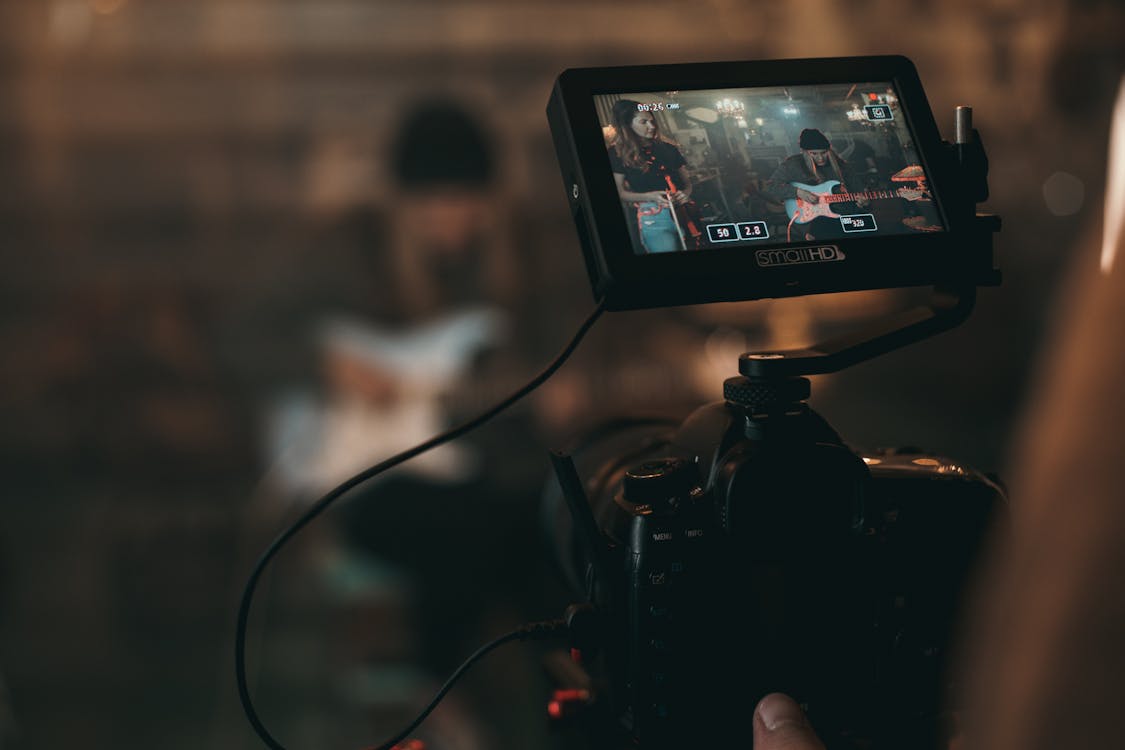
This matters to anyone who cares about book trailers as a creative form. The best trailers—the ones that actually move books—work because they create a visual argument tied to the book’s voice, structure, and emotional logic. The worst ones feel like a montage of vaguely literary b-roll: a woman walking through fog, a man staring at a laptop, a couple laughing in a field. Those images are not neutral. They carry their own history, their own generic weight, and they pull the viewer away from the book’s particularity.
What Stock Footage Actually Does to a Book Trailer
Stock footage is not inherently bad. It is a tool. But tools shape the work they are used for, and stock footage shapes book trailers in predictable ways.
First, it creates a mismatch between the book’s language and the trailer’s visual grammar. A novel might be precise about a character’s nervous habit, the smell of a particular room, the way light falls on a specific street. A stock clip of a generic street at dusk cannot hold that precision. The trailer becomes a paraphrase, and paraphrase is the enemy of persuasion.
Second, stock footage tends to flatten tone. A thriller and a literary family drama can end up using the same rain-on-window clip, the same empty hallway, the same slow zoom on a door. The images do not distinguish the books. They make them interchangeable. That is a failure of marketing, but it is also a failure of imagination.
Third, stock footage often introduces visual clichés that readers have learned to ignore. The overhead shot of a desk with a notebook and coffee. The silhouette walking away from camera. The hands typing. These images are so common in book trailers that they have become invisible. A trailer built from them is not building attention; it is spending it.
The Generic Emotional Register
Stock libraries are organized by emotion: hopeful, melancholy, tense, romantic. That organization is useful for search, but it encourages a kind of emotional shorthand. A trailer editor can search for “sad” and get a hundred clips of people looking out windows. The result is a trailer that signals sadness without earning it.
Books earn emotion through accumulation: a character’s history, a specific loss, a pattern of behavior. A trailer has only seconds, so it must find a visual equivalent for that accumulation. Stock footage rarely provides one. It provides the surface of emotion, not its structure. The viewer feels that something is being performed, not revealed.
This is why so many book trailers feel like perfume ads. They are beautiful, vague, and emotionally insistent. They ask you to feel something, but they do not tell you why. A good book trailer, like a good book, should make you curious, not just moved.
The Problem of Visual Plausibility
Stock footage also creates a problem of plausibility. A historical novel set in 1920s Berlin cannot be represented by a clip of modern Berlin with a vintage filter. A fantasy novel cannot be represented by a forest that looks like every other forest. The viewer may not consciously notice the anachronism, but they will feel the lack of specificity.
Specificity is what makes a book trailer convincing. A real location, a real object, a real gesture—these things carry weight. Stock footage is generic by design. It must be usable in many contexts, so it cannot be too specific. That is its commercial logic, and it is exactly the wrong logic for a book trailer.
Some editors try to solve this by layering effects: color grading, film grain, text overlays. But effects do not create specificity. They create a mood of specificity, which is not the same thing. The viewer may be momentarily impressed, but the impression fades quickly.
When Stock Footage Works
There are cases where stock footage can serve a book trailer well. A nonfiction book about climate change might use aerial shots of melting glaciers. A memoir about travel might use footage of the places the author visited. In these cases, the footage is not standing in for the book’s fictional world; it is illustrating a real subject.
Stock footage can also work when it is used ironically or self-consciously. A trailer for a satirical novel might deliberately use clichéd corporate stock footage to mock the world the book is satirizing. That is a knowing use of the form, and it can be effective. But it requires a clear editorial point of view, and it is rare.
The key is intention. Stock footage works when the editor has a reason to use it beyond convenience. It fails when it is the path of least resistance.
The Cost of Convenience
Stock footage is convenient. It is cheap, fast, and easy to license. For a publisher or an author with a small budget, it can seem like the only option. But convenience has a cost, and that cost is paid in attention.
A book trailer made from stock footage is competing with every other stock-footage trailer. It does not stand out. It does not create a memory. It does not give a reader a reason to click through to the book’s page. It is content, not persuasion.
This is the central problem. Book trailers are not just videos. They are arguments. They are attempts to move a viewer from curiosity to action. Stock footage, used thoughtlessly, weakens that argument. It replaces the book’s particularity with a generic visual hum.
Alternatives to Stock Footage
The alternative to stock footage is not necessarily expensive original footage. It is a different way of thinking about the trailer’s visual language.
One option is to use still images. A well-chosen photograph, a book cover, a piece of art—these can be more evocative than a moving clip. Still images force the editor to think about composition, pacing, and text. They can create a rhythm that stock footage often lacks.
Another option is to use typography as the primary visual element. A trailer built around the book’s title, a key line, or a series of questions can be powerful. Typography is specific. It is the book’s language made visible. It does not pretend to be something else.
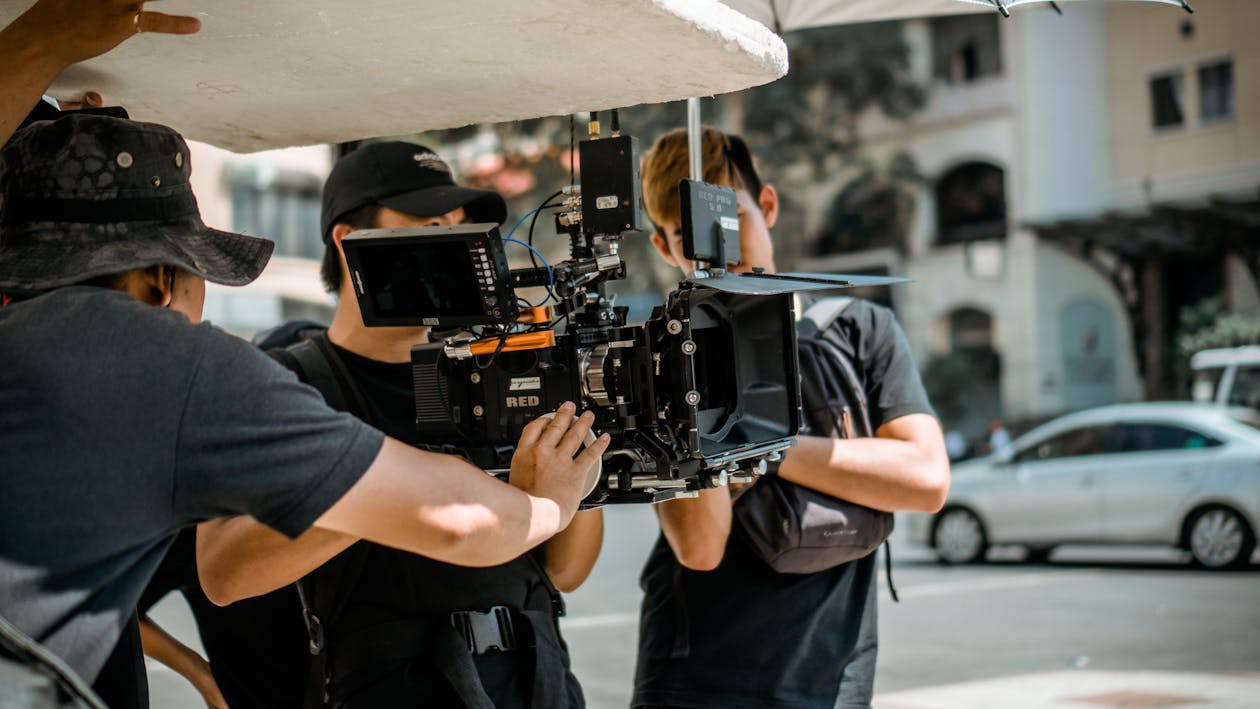
A third option is to commission simple original footage. A single location, a single actor, a single object—these can be shot on a phone and still feel more specific than a library clip. The point is not production value. The point is that the image belongs to the book.
None of these alternatives is easy. They require more thought, more time, more editorial judgment. But that is the work. A book trailer is a creative form, not a template.
The Editorial Standard
At this blog, the standard is simple: does the trailer serve the book, or does it serve the convenience of the editor? Stock footage is not the enemy. The enemy is the unexamined use of stock footage—the assumption that a book can be represented by images that were never made for it.
That assumption is widespread. It is visible in the hundreds of book trailers that look exactly alike. It is visible in the way publishers treat trailers as an afterthought, a box to check, a piece of content to post and forget. It is visible in the way readers scroll past those trailers without stopping.
The fix is not to ban stock footage. The fix is to ask harder questions. What does this book look like? What image could only belong to this book? What visual argument would make a reader curious? Those questions are the beginning of a better book trailer.

For a deeper look at why so many book trailers fail on a structural level, see Why Most Book Trailers Are Terrible and How to Fix Them. That piece examines the common mistakes that undermine even well-intentioned trailers, and it pairs naturally with this one.
FAQ
Is stock footage ever acceptable in a book trailer?
Yes, but only when it serves a specific purpose. Nonfiction books that illustrate real places or events can use stock footage effectively. Satirical or self-aware trailers can use stock footage as a deliberate visual joke. The test is whether the footage adds something the book needs, not whether it is easy to find.
What is the biggest mistake editors make with stock footage?
The biggest mistake is using stock footage as a substitute for visual thinking. Editors search for clips that match a mood or a keyword, then assemble them into a sequence. The result is a trailer that signals emotion without earning it. The fix is to start with the book’s specific images, not with the library’s categories.
How can a low-budget author avoid stock footage?
Low-budget authors can use still images, typography, or simple original footage shot on a phone. The goal is specificity, not production value. A single well-chosen image that belongs to the book is worth more than a dozen generic clips. The constraint of a small budget can actually force better creative decisions.
Why do so many book trailers look the same?
They look the same because they are built from the same libraries, the same emotional categories, and the same visual clichés. Stock footage is designed to be reusable, so it cannot be too specific. When editors rely on it without a strong point of view, the trailers become interchangeable.