The Sales Numbers Tell a Story We Can’t Ignore
I need to tell you something that still makes me sit with my coffee a little longer in the mornings. The numbers are in, and they’re not small. According to NPD BookScan graphic novel market data, manga unit sales in the United States hit over 30 million copies in 2025. That’s not a typo. That’s real. And here’s where it gets interesting: this represents the fourth consecutive year of double-digit growth, which means this isn’t a trend anymore. Trends fade. This is a shift.
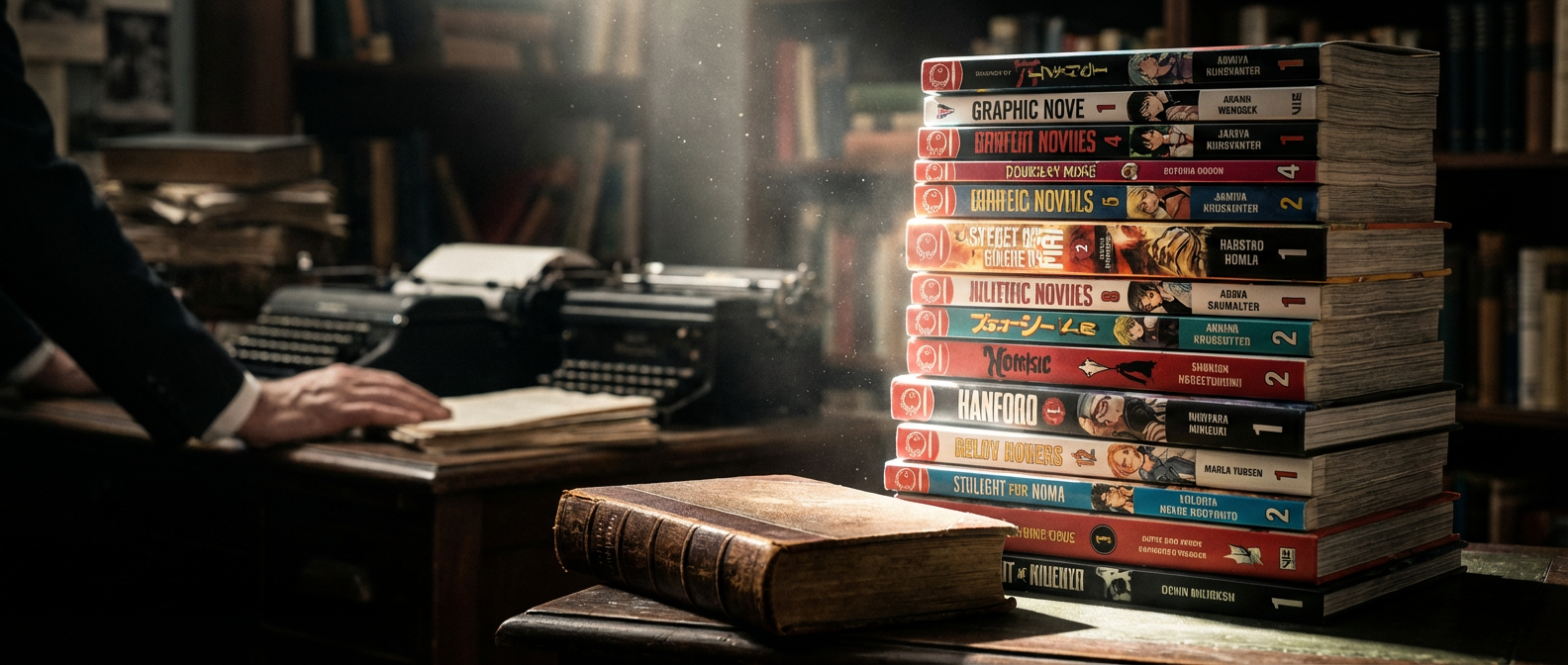
What makes this particularly worth sitting with is what manga is outselling. We’re not talking about graphic novels competing with beach reads and airport thrillers. We’re talking about manga outselling adult literary fiction by volume. Think about what that means. The category we’ve historically treated as serious literature, the one we put on syllabus lists and assume contains the “real” writing, is now moving fewer copies across bookstore shelves than work that relies heavily on visual storytelling. I don’t think that’s a criticism of literary fiction. I think it’s a compliment to what manga has become.
Children’s Literature Got the Memo First
Here’s what’s fascinating about watching this shift: the kids’ publishing world understood what was happening before anyone else did. Scholastic’s 2025 annual report showed that graphic novels claimed four spots in the top ten bestselling children’s and YA titles. Four. In the ten most popular books for young readers in an entire country, nearly half are graphic novels. Some of these are new installments of established series like Dog Man, which moved over 3 million copies. That’s not marginal success. That’s cultural momentum.
What strikes me about this is the generational signal embedded in those numbers. Kids aren’t choosing graphic novels because they can’t read traditional prose. They’re choosing them because they work better for what these stories are trying to do. Because a fully illustrated narrative hits differently. Because sometimes a character’s expression drawn across a panel carries more emotional weight than three paragraphs of narration. I grew up hearing that comics were a stepping stone to “real” reading. The data suggests we had that backwards the entire time.
The Publishers Are Betting Real Money on This
Publishers aren’t stupid. They follow demand the way birds follow migration patterns, and right now they’re heading directly toward manga and graphic novels. Viz Media and Kodansha, two of the largest publishers in this space, both announced significant US expansion plans in 2025. Viz Media specifically increased its English-language releases by 40 percent year-over-year. That’s not a cautious dip of the toe into deeper waters. That’s a full sprint.
When major publishers commit that kind of capital and production capacity to a category, it tells you something real about where they believe the market is going. This isn’t about keeping a niche happy. This is about recognizing that the niche has become the center. The infrastructure is expanding. Translation work is accelerating. Distribution channels are multiplying. Everything about how publishing works is being reorganized around the fact that people want this medium, in volume, and they want it consistently.
Libraries Are Your Truest Indicator of Where Culture Is Heading
I love libraries. I love them because they don’t care about marketing narratives or bestseller list politics. They care about what their actual patrons are checking out. According to a 2025 report from the American Library Association, graphic novels and manga represented the fastest-growing category in public library circulation for the third consecutive year, with a 22 percent increase in checkouts. That’s not one year of spike. That’s sustained movement in one direction.
Libraries tell the truth about reading because they have no incentive to lie. No one’s getting a bonus for promoting a genre that doesn’t match what their communities actually want. These circulation numbers represent real people walking into buildings and selecting these books with intention. They’re reading manga on their commutes. They’re introducing graphic novels to their kids. They’re discovering new work in this medium and coming back for more. That’s not a fad. That’s culture shifting.
The Creativity Boom Means Better Work Than Ever
Here’s what truly gets me excited, though. The boom in manga and graphic novels isn’t just generating more volume. It’s generating more creativity. The Eisner Awards, which are the industry’s most prestigious recognition, received over 2,800 eligible works in 2025. That’s a 35 percent increase from just five years earlier. Look at Eisner Awards official nominations and winners and you’ll see the range of what’s being created. Experimental formats, deeply personal memoir work, fantasy epics, romance that breaks your heart. The medium isn’t homogeneous. It never was.
When more people have permission to create in a medium, we get better work. More perspectives. Stories that wouldn’t have existed before because the creator wasn’t sure there was a place for them. Work from creators who might not have survived traditional publishing gatekeeping. The numbers that seemed so abstract when I started this conversation actually translate into specific books, specific artists, specific stories that now exist because the market made space for them.
I want to be careful not to frame this as traditional fiction losing something. Literature in prose form isn’t disappearing. What’s happening is more interesting than a simple replacement. We’re expanding what we count as serious reading. We’re acknowledging that visual storytelling is storytelling. We’re recognizing that a beautifully composed panel sequence can carry as much narrative weight as prose. The pie isn’t shrinking. It’s being sliced differently, and more people are getting fed.
So what do you think? Have you noticed this shift in your own reading habits? Are you someone who’s been reading manga for years and watching it finally get the recognition it deserves, or is this new territory for you? I’d genuinely love to hear what’s been catching your attention lately, because right now, the most interesting conversations about reading are happening across all these different mediums at once.